
By Mark Glaser
In a tough climate for local news, Press Forward brought together more than 200 funders, publishers and journalism support organizations at the third annual Summit in San Antonio to discuss how they could work together to strengthen local news as an essential civic infrastructure.
Dale Anglin, Press Forward executive director, noted just how far the funder coalition has come.
“Three years ago, as local news continued its free fall, 22 foundations made a simple bet: a problem too big for any one foundation can only be solved together,” she said. “Today, that bet is paying off because together we’re changing the way local news is funded in America.”
One of those big changes is the growth of local Press Forward chapters around the country. There are now 48 local chapters and Anglin reported that they have collectively invested $87 million in local news. And that’s just the beginning — many of the chapters are relatively new and will likely boost that total in the years to come.
Here are some key takeaways from the Summit.
1. Local news plays a crucial role upholding democracy, particularly during the midterms.
The journalism funders in the room drew inspiration from two talks during the second day of the Summit. First was a “fireside chat” between veteran broadcast journalist Scott Pelley, who was fired from “60 Minutes,” and Knight Foundation President and CEO Maribel Pérez Wadsworth. Pelley talked about what he had learned about owner interference at “60 Minutes” and CBS News, as well as the hope he has for journalism by seeing young people in the class he teaches at Columbia Journalism School.
“There is no democracy without journalism,” Pelley reminded the audience. “It can’t be done. People cannot make decisions in this country about their own lives and the lives of their families and the life of the country without having reasonably reliable and independent sources of information.”
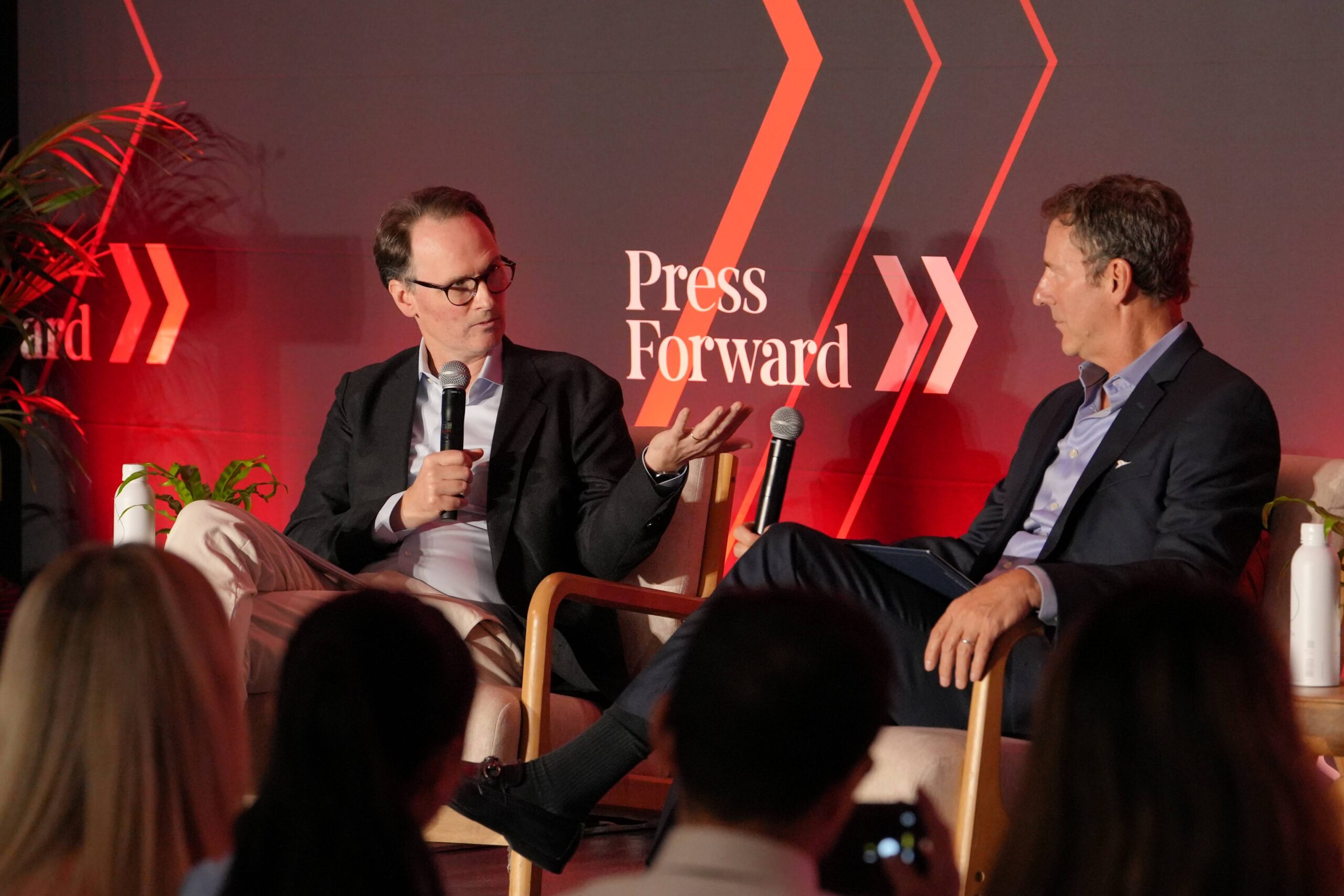
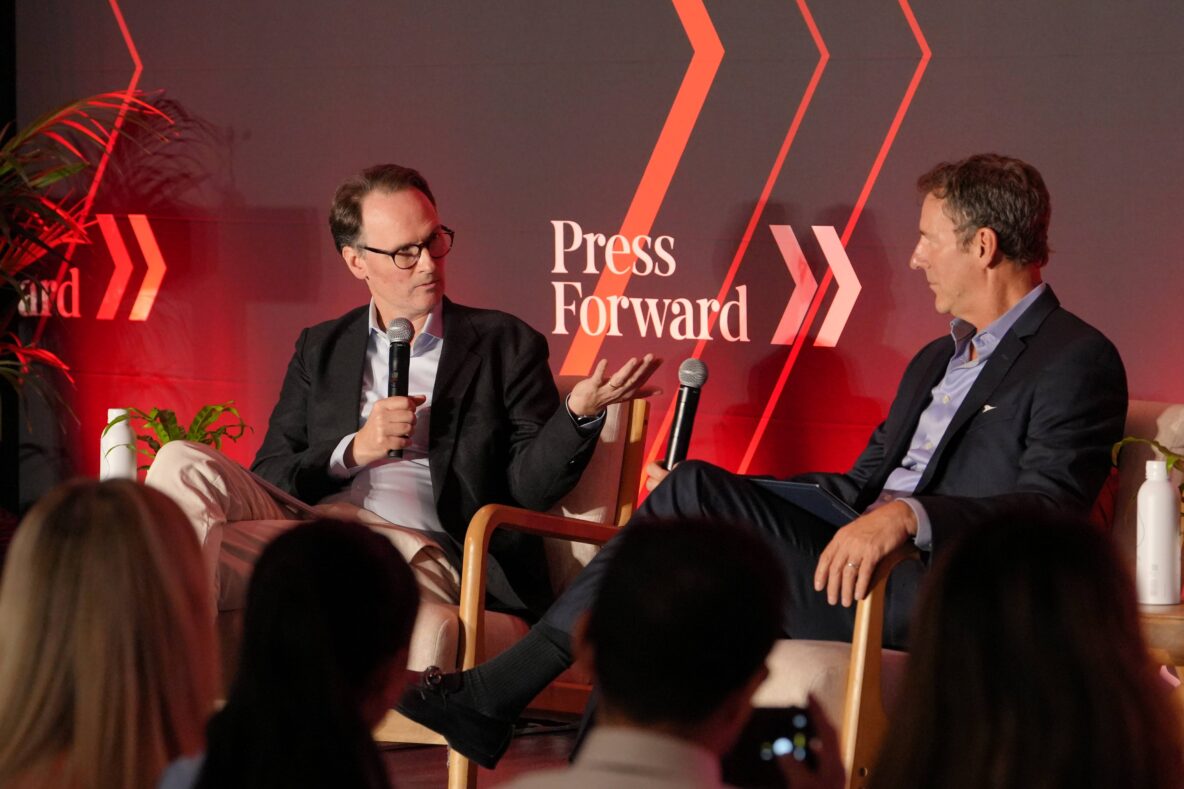
John Palfrey of MacArthur Foundation and Mark Updegrove of the LBJ Foundation on stage at the Press Forward Summit.
Later, the audience was given a special preview of a new PBS documentary, “In Pursuit: Lessons in American Leadership,” produced by Retro Report and including interviews with Mark Updegrove, presidential historian and president and CEO of the LBJ Foundation. Updegrove then had a conversation with John Palfrey, president of the John D. and Catherine T. MacArthur Foundation.
During the talk, Updegrove returned again and again to the importance of local news as essential to democracy’s checks and balances, as being “the immune system” of democracy. Local news, he said, can provide a crucial defense of the integrity of the upcoming midterm elections.
“[The defense] is going to come from governors, lieutenant governors, attorneys general, judges and journalists standing up for the integrity of the voting results, the voting tallies in various states that are being contested,” he said. “It’s going to fall to [local news]. That’s where leadership is going to come from.”
2. Newsrooms can build “fandom” like sports teams.
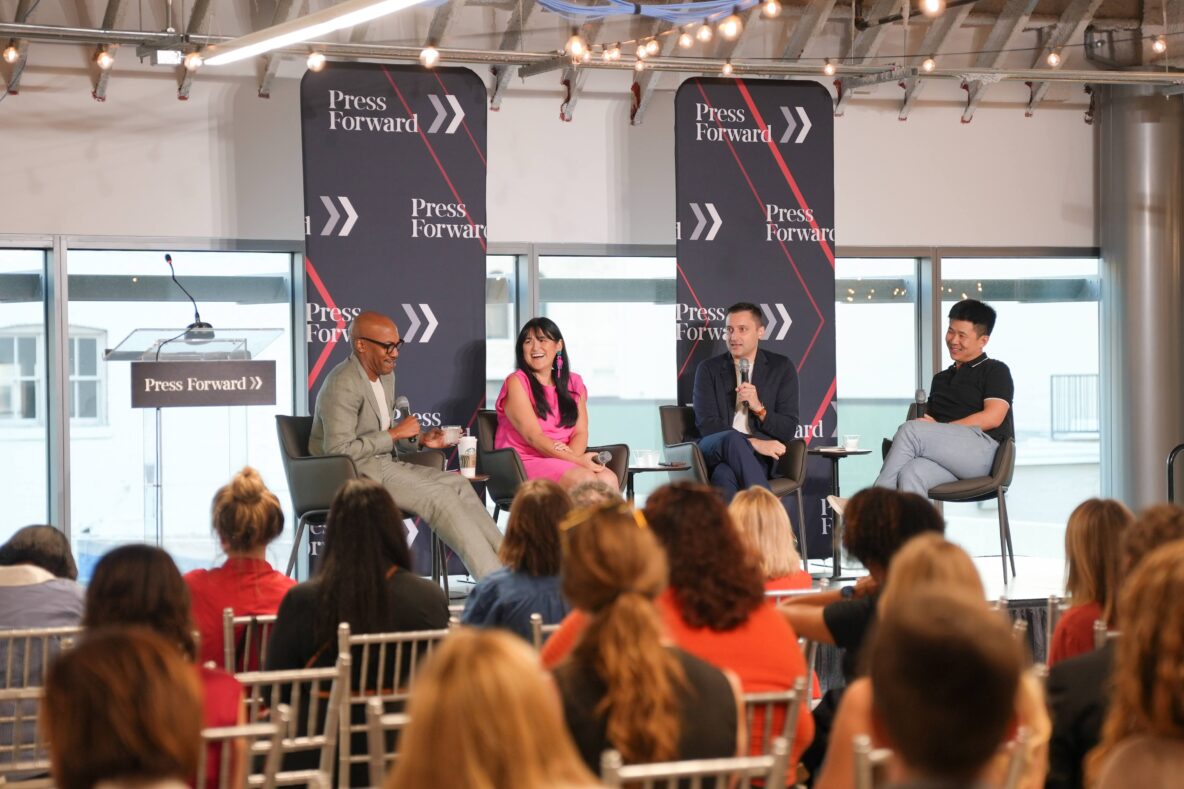
Being in San Antonio, it didn’t take long for a friendly war of words to break out between the local San Antonio Spurs fans and those from New York who rooted for the Knicks in the last NBA Finals. And it happened during the panel, “Journalism as a Fandom,” with the idea that journalists can build a community-driven fandom just as sports teams do.
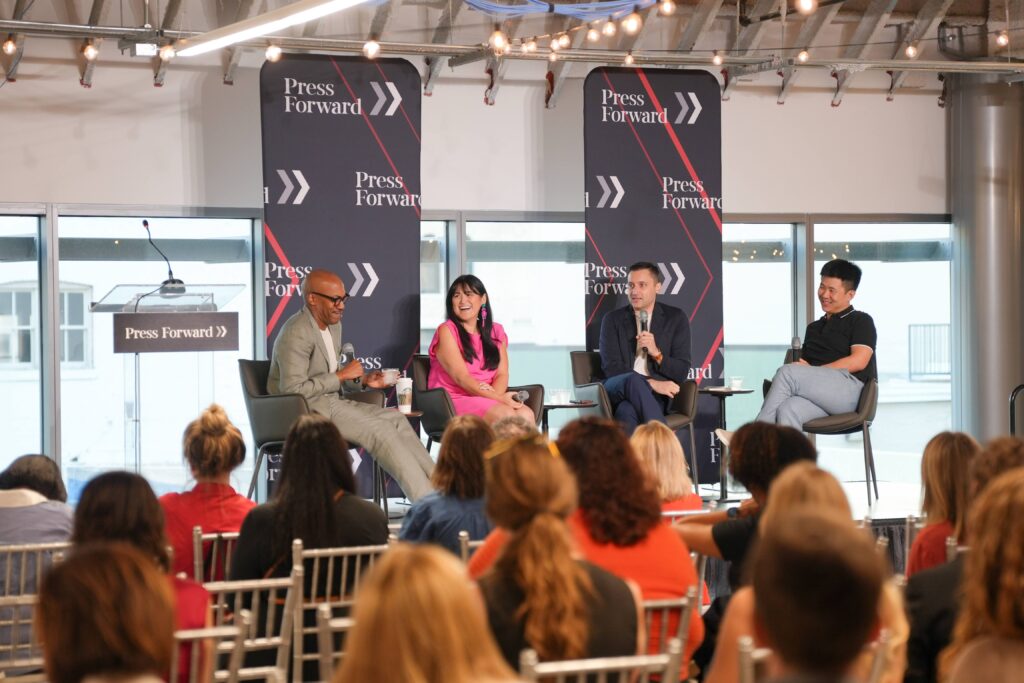
The “Journalism as a Fandom” panel included (left to right): podcast and radio host Sam Sanders, Ashley Alvarado of Texas Public Radio, Ben Collins of The Onion and Jasper Wang of Defector Media (Photo courtesy of Press Forward)
Ashley Alvarado of Texas Public Radio explained how the station builds deeper community ties through local engagement efforts such as pottery sales or TPR memberships for pets. Ben Collins of The Onion highlighted the importance of taking “big swings” (like buying the Infowars website) and using satire to engage audiences and reclaim cultural spaces.
Meanwhile, Jasper Wang from the sports and culture outlet Defector Media noted that journalists themselves are the primary assets, so building brands around individual personalities can foster deeper connections.
“I would also encourage folks to see vulnerability as a strength,” Wang said. “We are a worker-owned collective, and what works for us is just bringing people behind the scenes a little bit…[You can] build in public and say, ‘Hey, this is a thing we’re working on, and we’re still trying to work it out, and we might fail, but we’re gonna have a good time doing it, and we’re interested in your input.’”
3. Funding AI in an ever-changing world.
As artificial intelligence companies come under fire for using outlets’ content without permission, there’s a parallel story about how newsrooms can use AI tools to help them do research and reporting.
The session “Funding AI in Local News” included some skepticism, along with calls for ethical and transparent use of AI. Kelly McBride, senior vice president at Poynter Institute, said that newsroom culture should be open about how people are using AI instead of people using it surreptitiously.
“What I look for in a newsroom is I want to see people openly talking about what they are doing with AI, how they’re using it, the successes that they’re having, and the failures as well,” she said.
There was also an idea discussed that funders might support shared AI technology for newsrooms that’s separate from those run by OpenAI and Anthropic.
“I think the more that local newsrooms can start relying on infrastructure, maybe it’s funding of shared infrastructure to run local [AI] models, the safer data is going to be,” said Alex Mahadevan, director of MediaWise at Poynter. “The less we have to rely on AI subscriptions and the big tech companies.”
4. Public policy makes big strides, with California topping them all.
In a few short years, public policy in support of local news has gone from a distant aspiration to a proven, winnable strategy led by states and cities. That was evidenced by the Local News Policy Summit taking place for the first time a day ahead of the summit, bringing together 85 legislative, community and news leaders.
Press Forward’s Dale Anglin mentioned the string of recent policy wins in New Mexico, Colorado and Vermont. The biggest one of all was in California, where a new and unprecedented tax credit will bring in $40 million a year for local news over the next five years.
“A huge congratulations to Rebuild Local News, our four California chapters, and all of you who worked on this,” Anglin said to a large round of applause. “We’ve never seen that before. We have to see it again.”
The session “From Interest to Influence: Building a Local News Policy Coalition” carried that idea from celebration to practice. Its premise was that a promising idea isn’t enough; success takes the right coalition, trusted messengers, legislative champions and the stamina to play the long game.
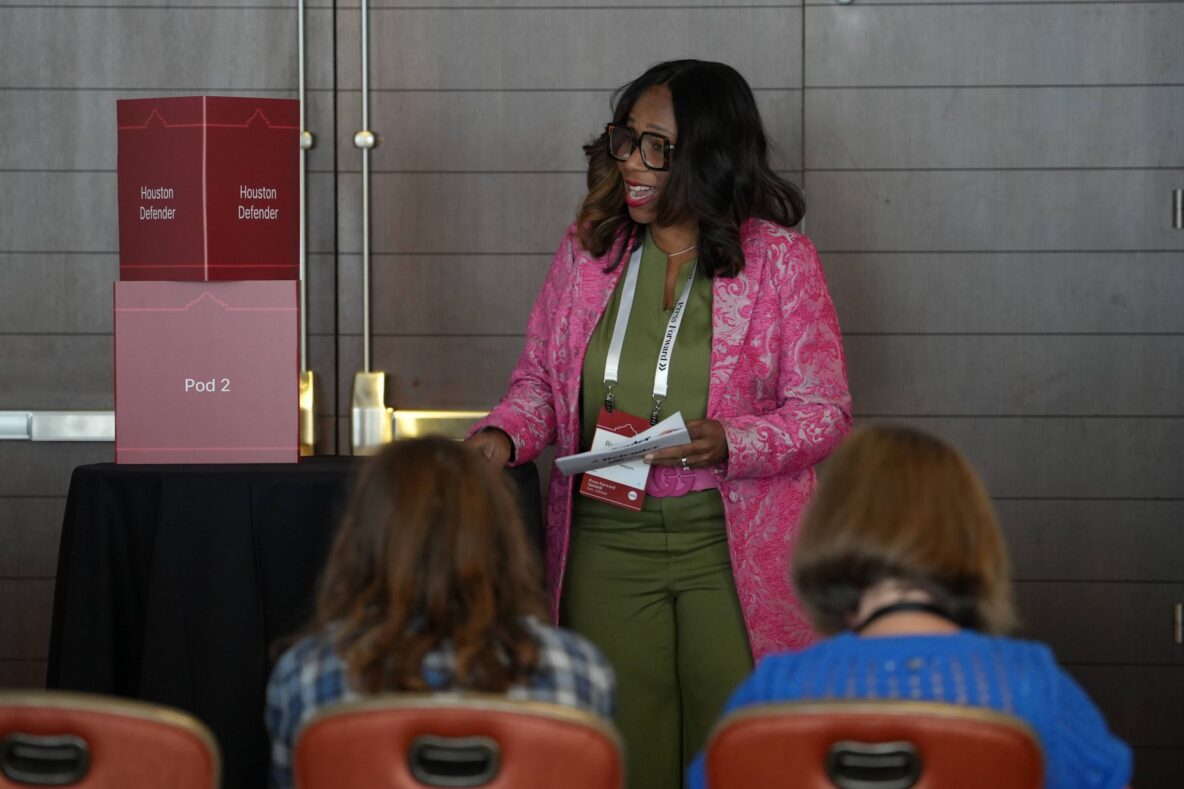
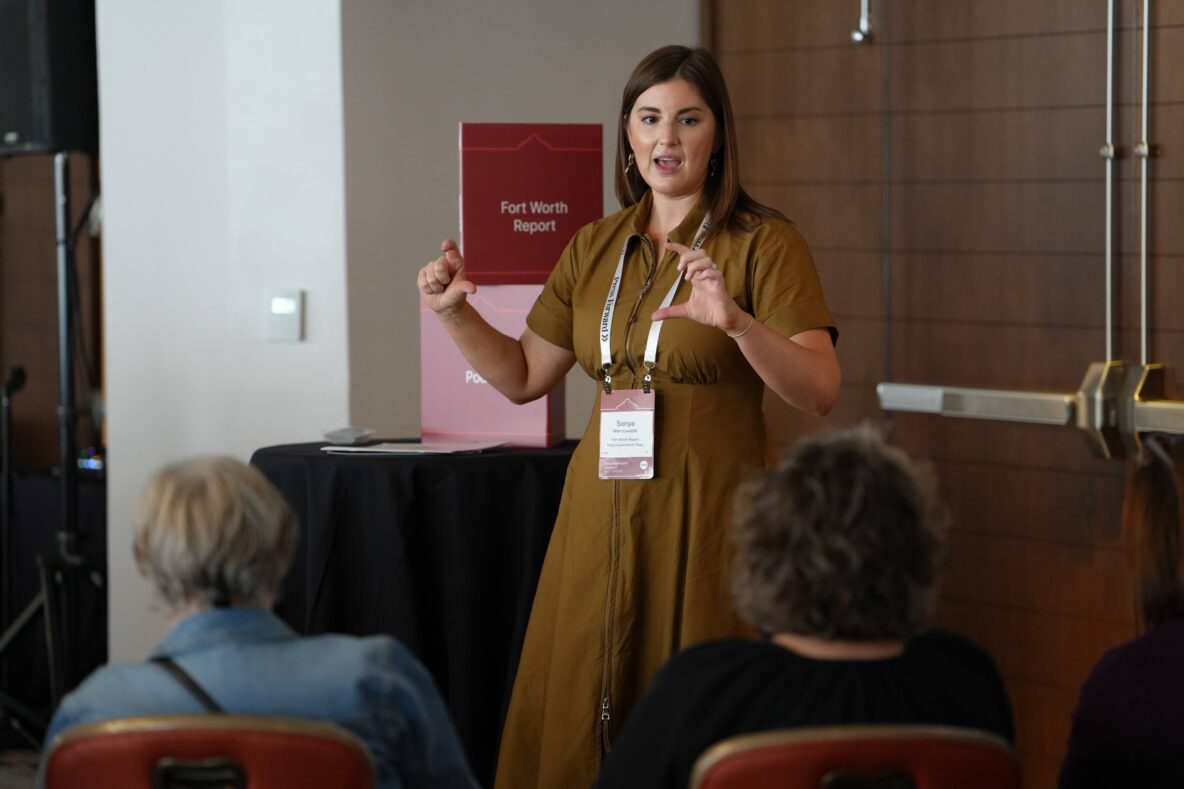
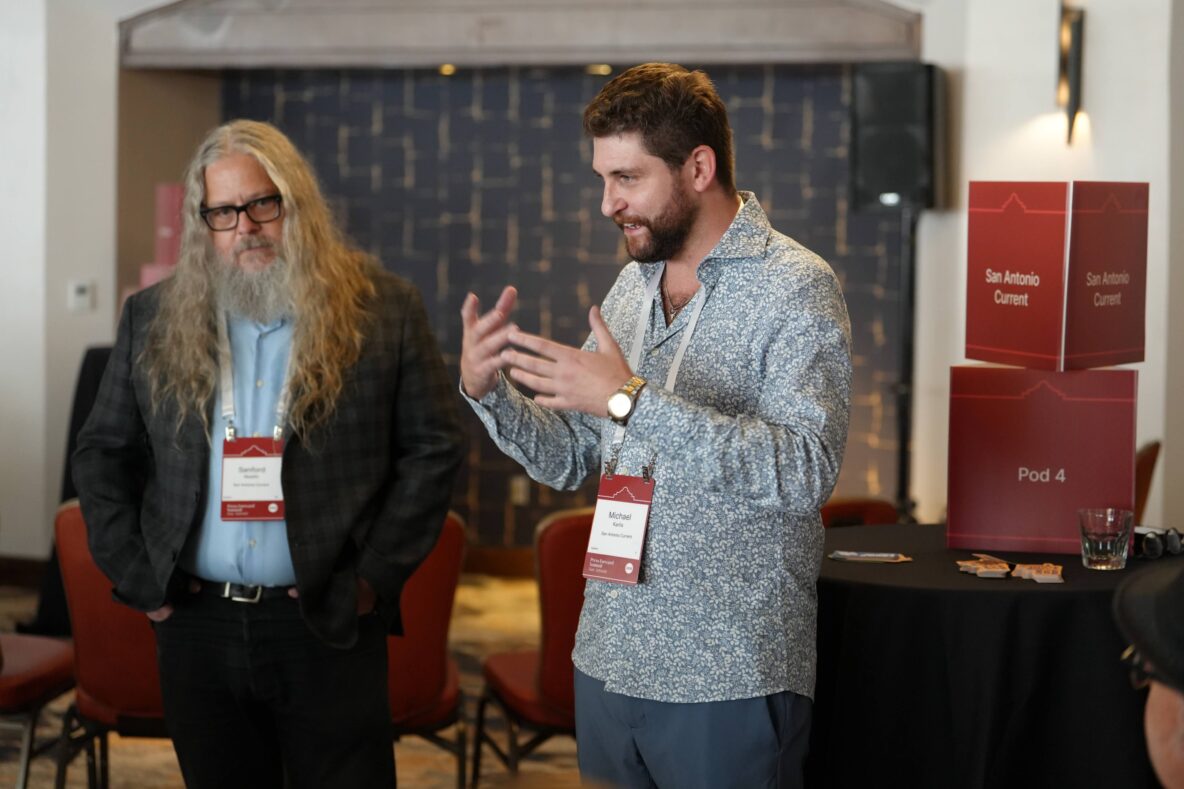
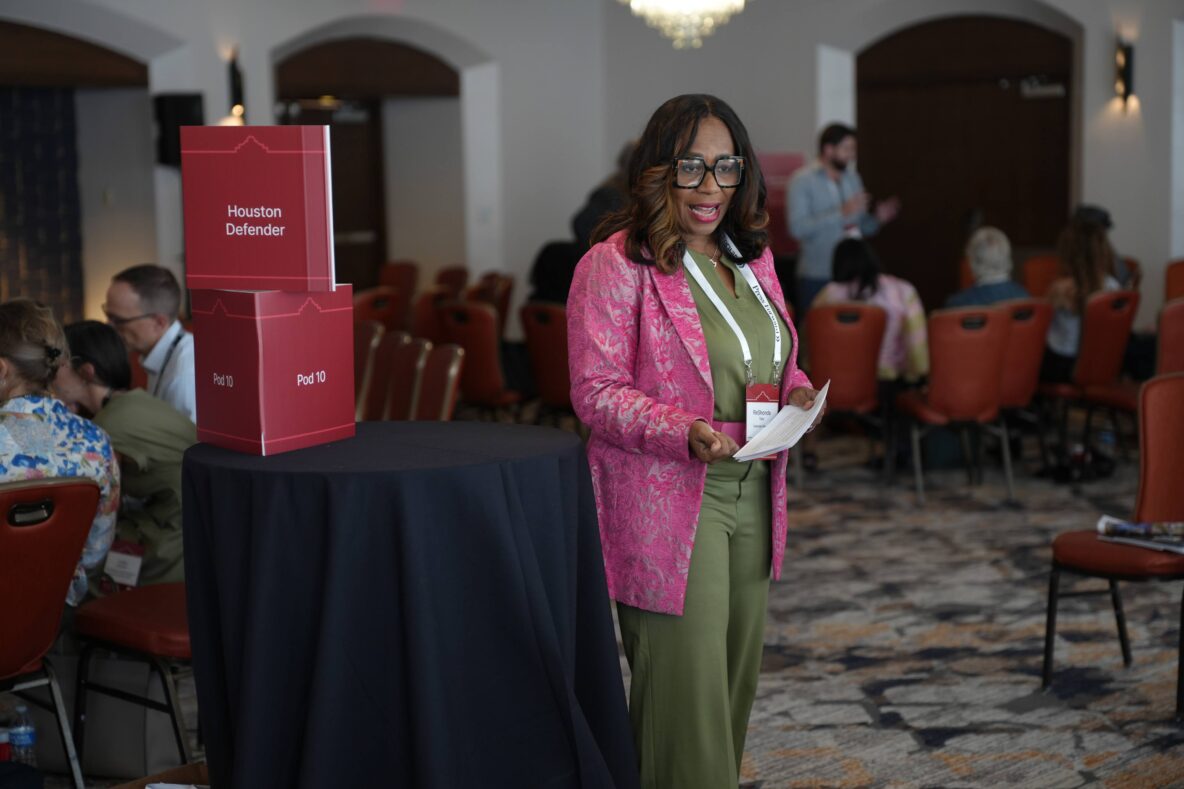
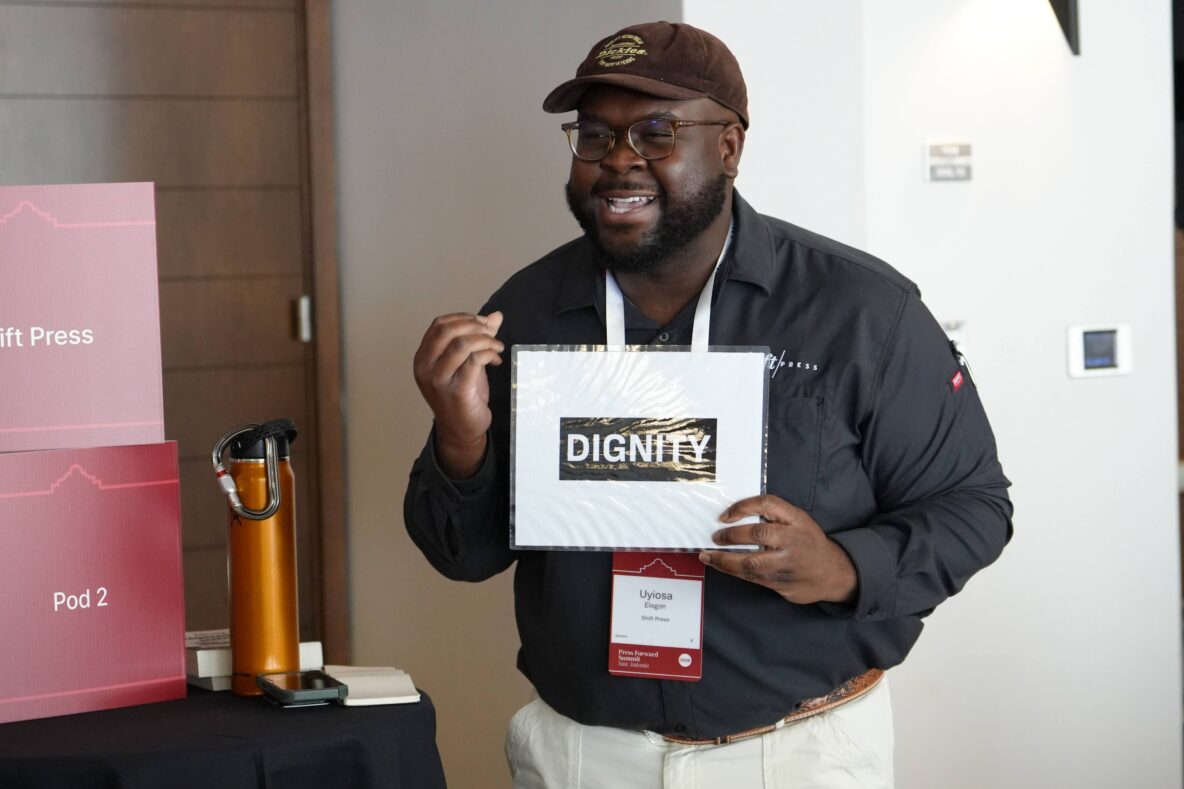
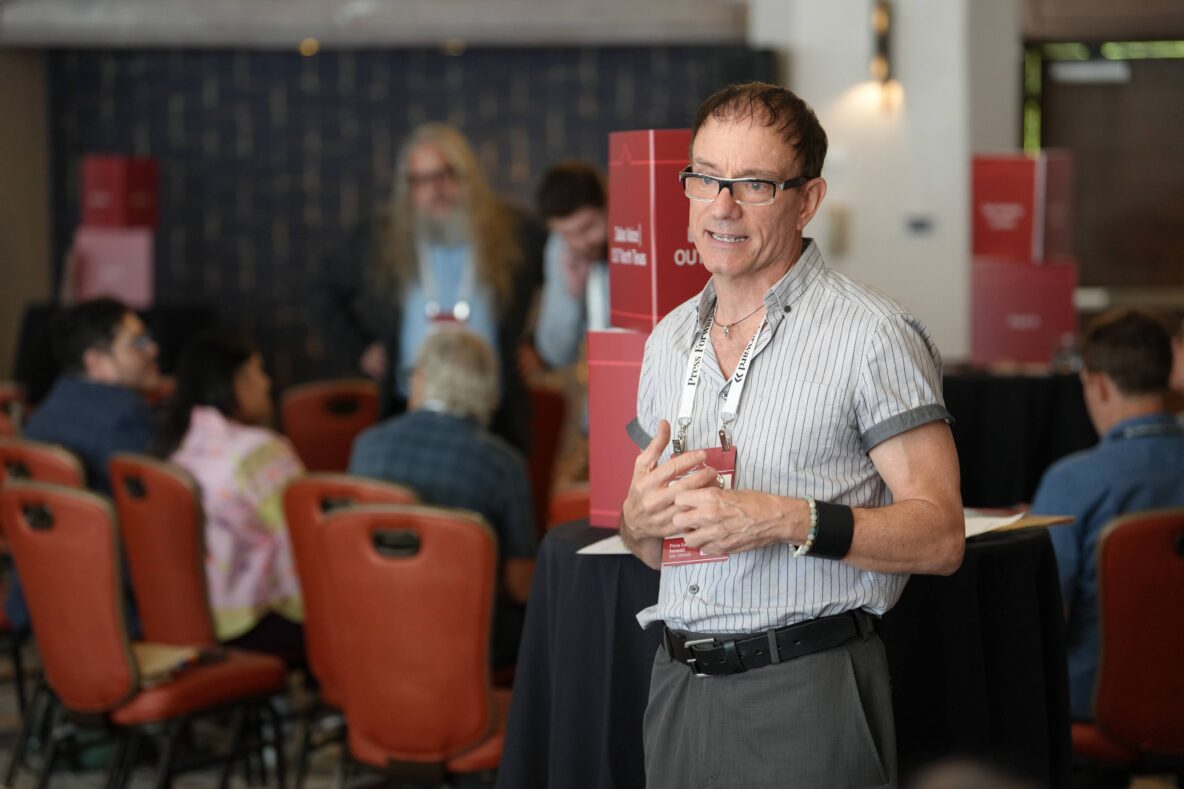
The session included facilitated breakout tables where groups tackled different challenges: building and sustaining a coalition; using local momentum; finding the right policy partner; and adapting strategy to local realities.
The breakouts surfaced solutions that ranged from the hyper-local and tactical to large, creative concepts. There was a clear appetite from people in the room to join Press Forward’s Public Policy Working Group to explore these topics in more depth. With leaders at very different moments in their public policy work, they looked forward to more peer learning opportunities.
The through line of the session was simple: just start somewhere. One conversation in your community can surface an opportunity or a potential partner that becomes the foundation of your public policy work.
The Summit underscored that sustaining strong local journalism takes more than funding individual outlets or adopting new technology: it requires trusted, community-rooted reporting, thoughtful use of AI with human judgment, and audience relationships that give people a sense of connection and ownership. Speakers highlighted how funders can increase their impact by collaborating, investing in shared infrastructure and widening the circle of support — including reaching people through community giving and trusted messengers.
Mark Glaser is a communications consultant for Press Forward, American Journalism Project, Tiny News Collective and The Lenfest Institute, and was the founder and executive editor of MediaShift.org. He was formerly the director of business and program development for the New Mexico Local News Fund. He runs the Wind Power Media consultancy out of Santa Fe.