

The argument for local news has long been rooted in crisis: communities need reliable information to function, and the organizations providing that information need financial support to survive.
But in practice, that case doesn’t always land. The connection between thriving communities and reliable news can feel abstract, and focusing on the industry’s decline often leaves people feeling overwhelmed.
It’s a tough sell — especially for funders who have never supported local news.
The Rhode Island Foundation, home to the newly launched Press Forward Rhode Island, is building on a broader movement across the Press Forward network to frame local news as a civic health issue. The foundation is also deepening that work through its leadership in a national effort focused on community foundations.
Civic health refers to the strength of relationships between people, institutions, and the places they live — supported by infrastructure like public spaces, cultural events, and other systems and opportunities that facilitate engagement, belonging, and connection.
Local news is a critical part of that infrastructure. Reliable and accessible news and information help residents understand their communities, make informed decisions, and find common ground.
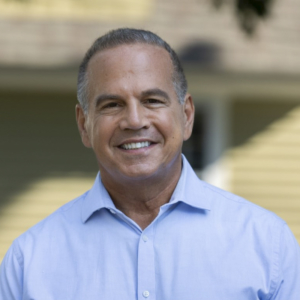
David N. Cicilline, President, Rhode Island Foundation
“So much of restoring civic health in communities is restoring people’s trust in institutions and connection to the communities they’re part of,” said David Cicilline, president and CEO of the Rhode Island Foundation. “Trustworthy, reliable information is foundational to a functioning democracy. It’s foundational to a functioning neighborhood.”
From listening to strategy
In 2023, soon after Cicilline joined the Rhode Island Foundation, the organization launched a yearlong community engagement process to inform its five-year action plan. Residents across the state consistently raised concerns about division, polarization, and a growing sense of disconnection.
“One thing we heard over and over again from people was: can the Rhode Island Foundation do more to help bridge some of the divisions and bring people together?” said Cicilline, who served Rhode Island’s First Congressional District in the U.S. House of Representatives for 12 years before joining the foundation.
That feedback helped shape one of the foundation’s priority areas: Civic and Cultural Life — grounded in the idea that when people feel more connected to one another, to institutions, and to the places they live, communities are stronger overall.
Around the same time, Cicilline was engaging with peers across the country and with organizations like CFLeads and the National Civic League. In partnership with the National Civic League, the foundation conducted research, interviews, and stakeholder convenings to develop an “Action Guide for Improving Civic Health in Rhode Island,” a practical resource for strengthening connection, engagement, and civic life across the state.
The work with CFLeads and the National Civic League has continued and expanded into a broader national initiative, Community Foundations for Civic Health — a growing network of place-based funders exploring how civic health can shape their strategies and investments.
“Community foundations are well positioned to advance civic health efforts because of the distinctive roles they play locally,” said Micah Salkind, Director of Civic and Cultural Life at the Rhode Island Foundation. “Grounded in specific places, they have deep insight into community needs and relationships, and their nonpartisan standing enables them to bring together a wide range of partners who may not typically work alongside one another. Above all, we benefit from established trust among donors, nonprofits, public agencies, and residents alike.”
The early response has been significant. In 2025, the initiative engaged 168 community foundations across 45 states. Cicilline expects that number to grow.
“This is really an effort to help community foundations across the country think about effective ways to invest in improving the civic health of their communities,” he said. “And in those conversations, access to local journalism and trustworthy, reliable news is essential.”
A challenge and an opportunity
On April 9, Local News Day, the foundation publicly announced Press Forward Rhode Island and its grantmaking strategy, framing the initiative not just as a response to the challenges facing local news, but as an investment in the state’s civic health.
Launched in partnership with the van Beuren Charitable Foundation, the chapter is grounded in both community input and data — and designed to be responsive to Rhode Island’s specific needs.
Both organizations had already been investing in local news and information — supporting newsrooms, data projects, and efforts to strengthen the broader media ecosystem. As a place-based funder focused on Newport County, van Beuren Charitable Foundation saw an opportunity to deepen its impact by working at the state level through Press Forward Rhode Island.
“We’re looking forward to helping local organizations expand access to news, help the community access timely information, and address mis- and disinformation,” said Mary Johnson, program officer at the van Beuren Charitable Foundation.
In preparation for Press Forward Rhode Island’s launch, the foundations enlisted Hart Research to conduct a statewide survey, along with an online discussion board with Rhode Islanders of color. The findings revealed a complex and sometimes contradictory landscape.
Social media and TV news are the dominant sources of local information, with 49% of residents using them often, a pattern that mirrors national trends. At the same time, about one in three Rhode Islanders (34%) say it’s difficult to find reliable sources for local news and information, rising to 39% among residents of color.
Concern about misinformation is also widespread: 62% of residents say it is a “very big problem,” while an additional 20% say it is “fairly big.”
Still, belief in the value of local news remains strong. Eighty-nine percent of Rhode Islanders say local news is important, including 77% who believe it is “very important” — findings that align with Press Forward’s own research.
“We have this interesting data where people really believe in local news,” Cicilline said. “They know it’s important, they are very conscious that misinformation is a serious problem — and also they rely a lot on social media platforms.”
That tension points to both a challenge and an opportunity: people want trustworthy information, but they don’t always know where to find it or how to access it consistently. Salkind said the team is now translating the research into a clear, actionable strategy to guide grantmaking and partnerships.
Supporting local journalism isn’t just about sustaining an industry. It’s about rebuilding the conditions that allow communities to function: shared facts, informed decision-making, and consistent accountability.
That framing aligns with what many funders already prioritize — strong communities, reduced inequities, and improved quality of life.
Part of a growing movement
Rhode Island is not alone in this approach.
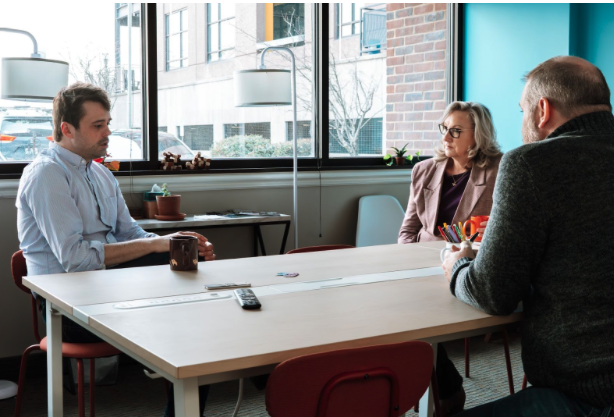
Pictured left to right: Richard Young, executive director of CivicLex; Dr. Melissa Newman of Press Forward Blue Grass; and Jason Blakeney, director of corps and newsroom excellence for Report for America. (Photo by Kasey Ogle Photography)
Other Press Forward chapters are also framing local news as a civic health issue. Press Forward Blue Grass, for example, supports CivicLex, a nonprofit focused on increasing civic participation and understanding in Lexington, Kentucky. Press Forward Maine has funded research tied directly to civic engagement and community connection. And Press Forward Minnesota has invested in partnerships between newsrooms and community-based organizations to better equip residents with the information they need to participate in civic life.
Cicilline hopes that momentum continues to build — in Rhode Island and beyond.
“My dream is every community foundation will be part of a Press Forward chapter,” he said. “It will make a real difference in this work.”